

Automotive & MobilityHyundai Mobis
A Beautiful Companion: Hyundai MOBIS CSR Engagement Platform
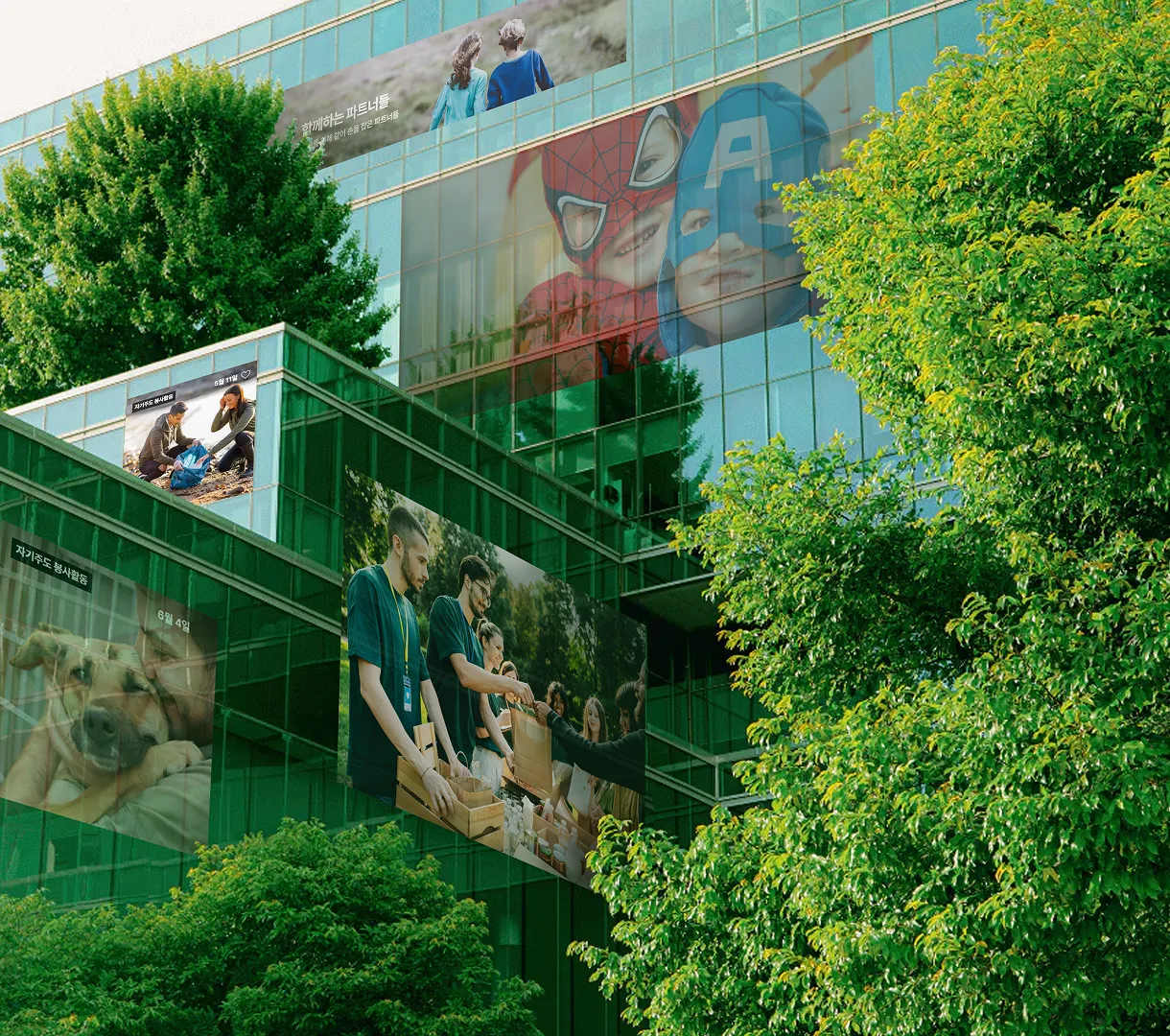

Helping 12,000 employees start, join and share volunteering on one platform.
Project Information
- Industry
- Automotive & Mobility
- Project Type
- New Build
- Role
- UX Research, UX Strategy, UX/UI Design, UX Writing
- Client
- Hyundai Mobis
- Client
Introduction - Hyundai Mobis is a global auto parts company leading the smart mobility era with a focus on autonomous driving, connectivity and electrification. Its three core modules (chassis, cockpit and front-end) create safe and convenient driving environments, it leads global mass production of key hydrogen fuel cell vehicle components, and it delivers differentiated mobility solutions by combining software and hardware.
Companies introduce many systems to improve efficiency and respond to market change, and among them, sustainable management has emerged as an essential strategy. Through Saltcake’s Hyundai Mobis social contribution platform project, we show why this strategy matters and how it is applied in practice.
Case Intelligence Summary
Pain Points
Without a systematic way to join and manage social contribution, it was hard to broaden participation.
As ESG gained weight, CSR became a key criterion for how investors judge companies, and employee giving — its core — links employees, customers and the brand. With 12,000 employees at 82 sites in Korea and bases in some 20 countries, Hyundai Mobis cared especially about community-based giving. But without a systematic system for joining and managing activities, it was hard to widen employee participation. Nor could it build a virtuous cycle that turns participation into recognition and reward. It needed an online platform where employees take part voluntarily and plan and run activities themselves.
Strategic Lens
We defined seven key elements of a successful social contribution platform.
Analyzing CSR platforms at home and abroad, we found two approaches — building your own or using an existing solution — with overseas companies favoring solutions and Korean companies mostly using portals or public services. IT companies that fused giving strategy with corporate culture stood out: Microsoft runs a platform for donations and skills-based volunteering plus volunteer leave, Samsung offers rewards like certificates, awards, training and grants, and Google works closely with national and local communities. Drawing on these cases and research papers, we defined seven keys to a successful employee-giving platform: reflecting company values, transparent results and process, respect for personal time and resources, varied ways to take part, alignment with organizational goals, a clear vision, and motivation through recognition and reward.
Creative Approach
We designed a bi-modal cyclical UX that connects participants and administrators in one cycle.
We designed the user journey around how each of the seven success factors would come to life at every stage. User journeys are usually drawn front-end first, but at Hyundai Mobis, where voluntary participation matters, the administrators who discover and lead activities play a crucial role. So we introduced a bi-modal cyclical UX design in which participants and administrators work in different systems yet stay connected toward one goal. A User Activity Matrix analyzing actions and services, pain points, needs and expectations at each stage revealed key behavior patterns and shaped the UI flow and information structure.
Delivered Experience
We designed a platform where employees create, join and share activities themselves.
We shaped the platform through three strategies: participation and leadership, a user-friendly approach, and communication and engagement. Rather than creating activities on the front end as Google does, employees get limited access to the admin system to create and manage activities, made easy by UI that feels like the front end and consistent UX writing. We designed a home screen for different situations, activity summaries that help people judge time and resources quickly, and proactive notification emails that even flag upcoming tasks. UI for sharing activity reviews and talking with other participants, plus an admin system for managing ideas, sustains long-term engagement. As a result, CSR moved beyond a statement into a virtuous cycle where employees' participation becomes social value.
Facing a similar challenge?
Contact